What is a Doctor of Osteopathic Medicine?
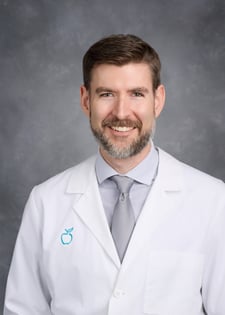
Bradley Jerew, DO
Family Medicine
 There are numerous types of healthcare providers a patient may encounter when interacting with the healthcare system, and at the highest level of training and expertise are physicians. In the United States, there are two main routes to earning a doctoral degree in medicine and the professional title of “physician”: the Doctor of (allopathic) Medicine (MD) and the Doctor of Osteopathic Medicine (DO). The primary difference between these pathways lies in their underlying philosophy.
The philosophy of allopathic medicine focuses on identifying specific symptoms and diagnosing and treating specific diseases. Alternatively, osteopathic medicine views the body as an interconnected system and focuses on overall wellness rather than treating a single ailment.
Osteopathic medicine was developed by Andrew Taylor Still, MD, a frontier-trained physician in Kansas who became frustrated with the ineffective treatments available in the late 1800s, which resulted in the deaths of patients, his wife, and several of his children. Dr. Still studied the relationship between the structure and function of the human body in depth to develop a hands-on approach to treating illness. He subsequently developed the core principles of osteopathic medicine, which are:
- The body is a unit
- The body possesses self-healing mechanisms
- Structure and function are reciprocally interrelated
- Rational therapy is based upon an understanding of the three preceding principles
Dr. Still and his contemporaries developed a treatment methodology, still used today by osteopathic physicians, called osteopathic manipulative treatment (OMT). This involves physical manipulation of muscles, fascia, and joints to improve bodily function. OMT can be used to reduce tension or pain, improve alignment or posture, or optimize internal functions such as digestion or breathing.
Dr. Still created the first osteopathic medical school in Missouri in 1892 and taught that maintaining wellness was best achieved by optimizing the whole unit of the mind, body, and spirit. Over subsequent decades, osteopathic physicians have worked to establish parity with allopathic physicians by expanding their scientific education and the rigor of their training while maintaining a focus on osteopathic principles.
Today, osteopathic medical students in 44 different schools complete nearly identical training as allopathic medical students, with the addition of several hundred hours of OMT training. Osteopathic medical students must pass board examinations very similar to those in allopathic medical schools, and many complete both forms of testing. After medical school, newly minted DOs and MDs join the same residency programs in hospitals throughout the United States and complete osteopathic or allopathic board certification examinations in their field of expertise. DOs and MDs are equivalent and share the same authority to practice after obtaining appropriate licensure.
The difference between an MD and a DO lies not in training or expertise, but in the foundational approach they use. Today, osteopathic physicians comprise around 10 percent of all practicing physicians. In my practice as an osteopathic family medicine physician, I use both evidence-based medical treatments and osteopathic treatments like OMT. I view mental and physical health in the holistic context of mind, body, and spirit by considering non-modifiable factors like age and family history, and by addressing factors like stress, sleep, diet, and physical activity to optimize overall health.